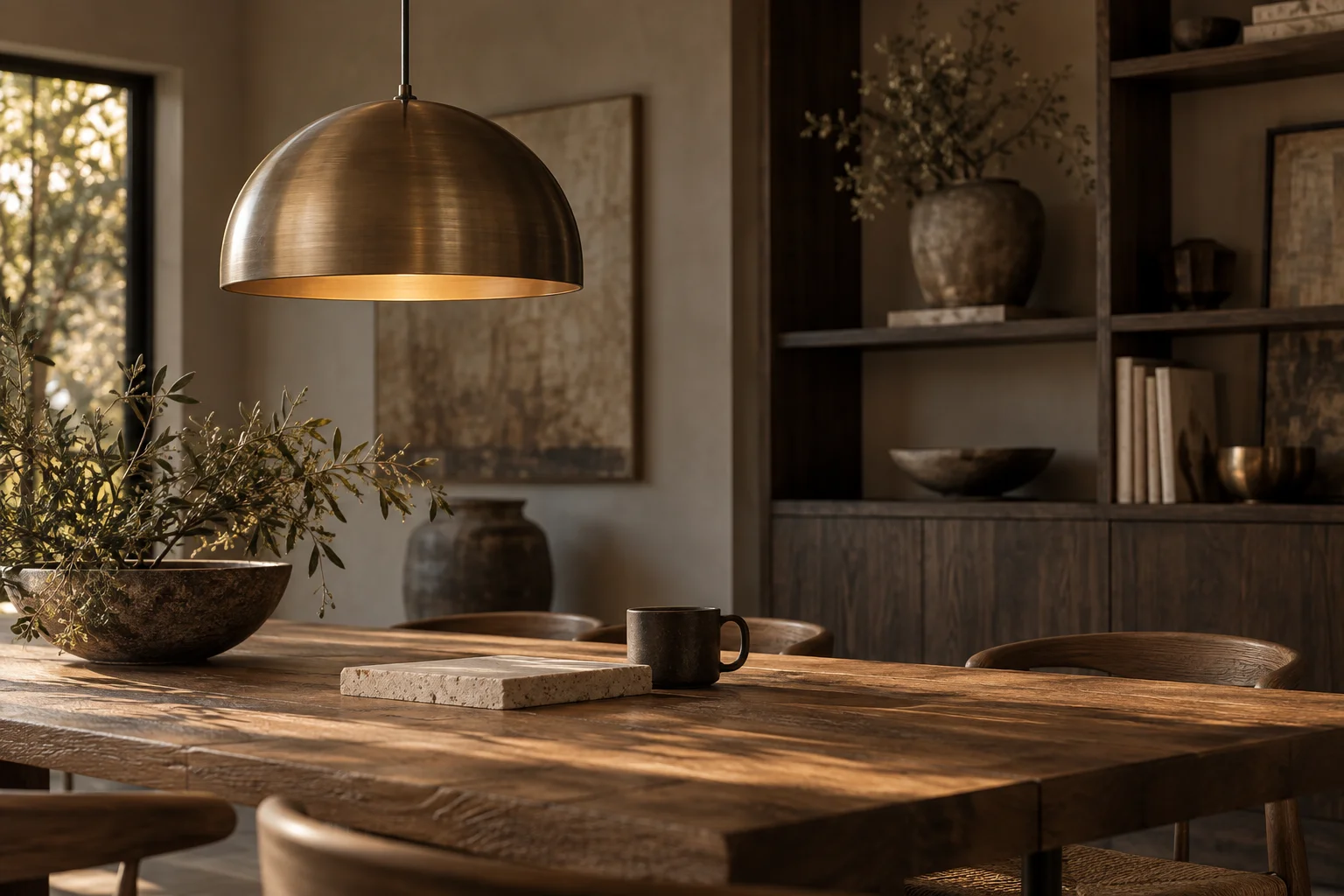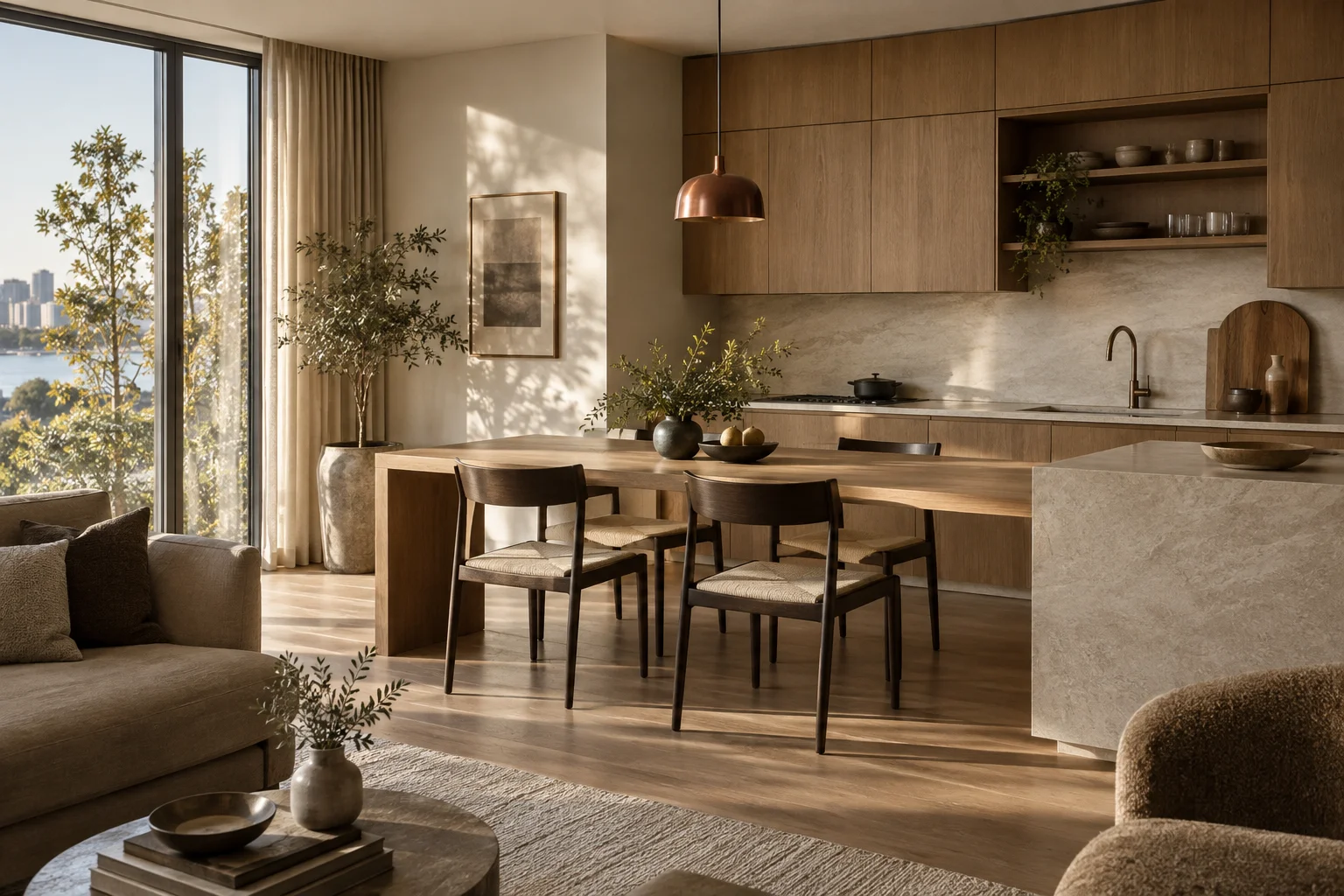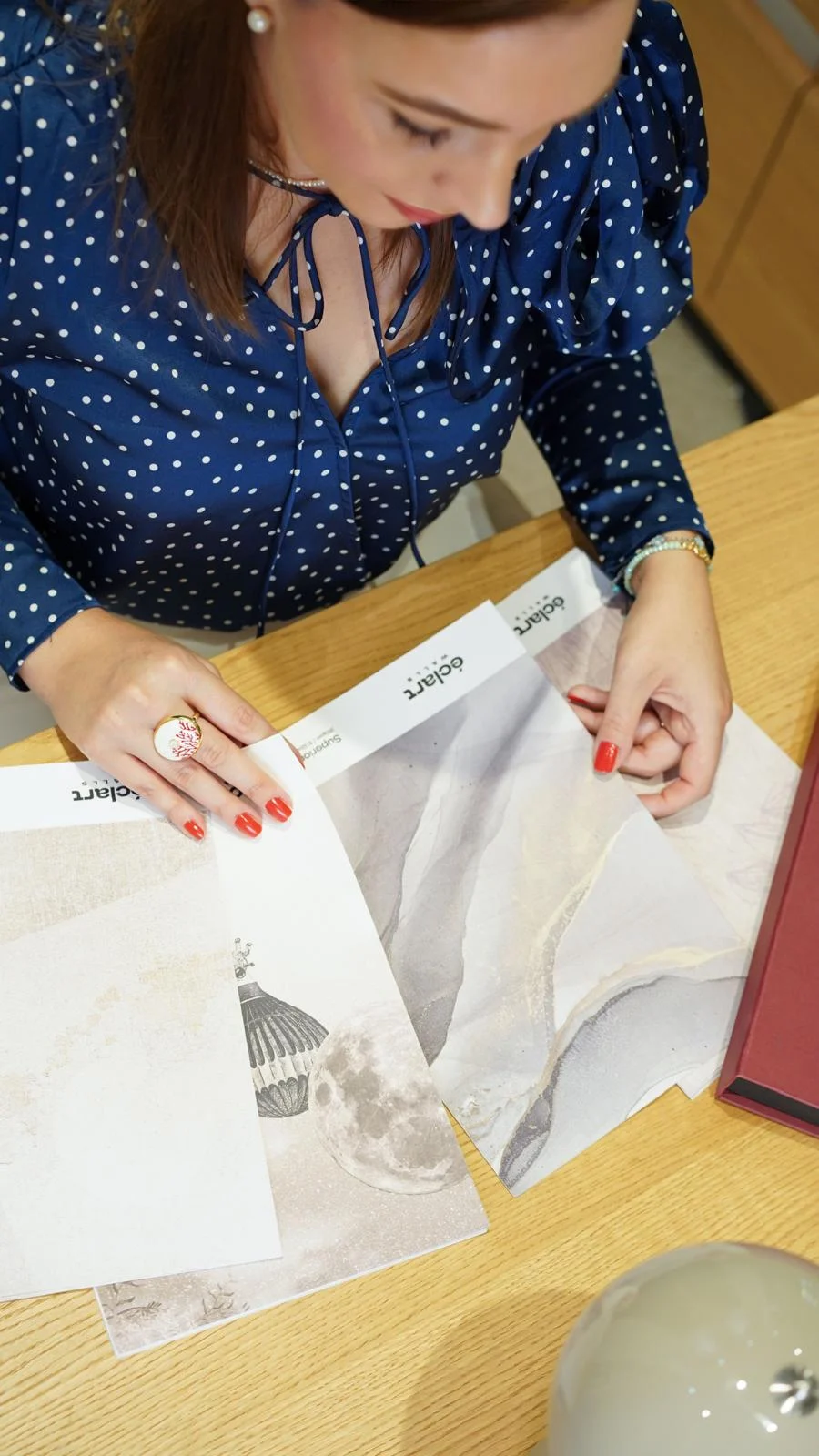
A material sample can easily catch our eye. We like the tone of a wood, the quiet presence of stone or the texture of a fabric. That is a good start, but before deciding, I like to imagine the sample in its actual place in the room.
A worktop beside the sink and a shelf holding books live very different everyday lives. I do not ask the same questions of them, even when I want them to belong to the same visual whole.
Where will the material be used?
I begin with the purpose of the surface. Will it be near water, touched often or subject to heavy use? Is it somewhere we pass through constantly, or a quieter corner?
The answers help narrow the choice. Instead of starting with every attractive option, we look for those that make sense in this particular space.
How is it cleaned and maintained?
I prefer to talk about maintenance before a purchase. It matters to check the manufacturer’s advice for the specific product: how to clean it, which products can be used and whether it needs any additional care.
The name of a material alone is not enough. The finish and the way it is installed can also matter, so I ask these questions about the exact surface we are considering.
It helps to know in advance:
- What does routine cleaning of this surface involve?
- Are there products or methods to avoid?
- Does it need extra care, and how often?
- Can the joints and edges be reached for cleaning?
Does the choice fit your habits?
Some people do not mind caring for a material from time to time. Others want the simplest possible routine. Both approaches are understandable. What matters is that the choice suits the person who will live with it.
That is why I ask how you use the space, what is impractical for you now and how much maintenance you want to take on. For me, those answers are part of the design brief.
How does it look in your light?
I like to see a sample alongside other materials, in conditions as close as possible to the space we are choosing it for. Colour, texture and sheen are easier to understand together than as separate decisions.
Sometimes it is the relationship between two surfaces that we are looking for: the warmth of wood beside a quieter wall tone, or a subtle texture against a smooth surface.
What will it look like in a few years?
Through my work in professional hygiene, I have also seen what happens after a material is chosen: daily contact, cleaning and signs of use. So I want to know how a surface will age and whether it can be repaired or renewed. The answers need to be checked for the specific product and finish.
A hotel reception desk and a surface in a private home do not see the same pattern of use. At a reception desk, luggage, trolleys and frequent cleaning all matter. The same appearance does not mean the same choice will work in both places.
I like patina and the character that time can bring to a space. What matters to me is that we understand in advance what changes to expect and whether we are comfortable with them.
I never look at a material only for how it appears as a sample. I am interested in its character, but also in how it behaves.
The material then becomes a thoughtful part of the space. Its appearance contributes to the atmosphere, while the way it works responds to everyday life.
If you would like to see how I connect these questions with layout and other choices, read more about my approach.
Ivana Novosel
Interior design with a personal approach.